Image of the Month November 2025 – Use of cardiac CT to assess valves

Author: S Chadalavada

Case Summary

An interesting case of a 27-year-old male with a rare homozygous splice mutation which led to ESRF and kidney transplant at age of 21. The congenital condition also led to complex LV outflow obstruction with a fibromuscular shelf and fibrosis extending to native aortic valve and MV apparatus. This required myectomy aged 10 and mechanical AVR and MVR and repeat sub-aortic myomectomy aged 20. While clinically stable, and asymptomatic on warfarin and tacrolimus, was noted to have high gradients across mitral valve on follow up echocardiography. Therefore, a TOE was requested.

Impression from TOE:

  • Posterior leaflet appears fixed with strands of fibrinous material ?thrombus.
  • AMVL is seen to move normally.
  • Significantly raised gradients 17mmHg across MV (context of tachycardia, HR: 108).
  • Mild – moderate transvalvular MR.


Cardiac CT requested to understand valves better.


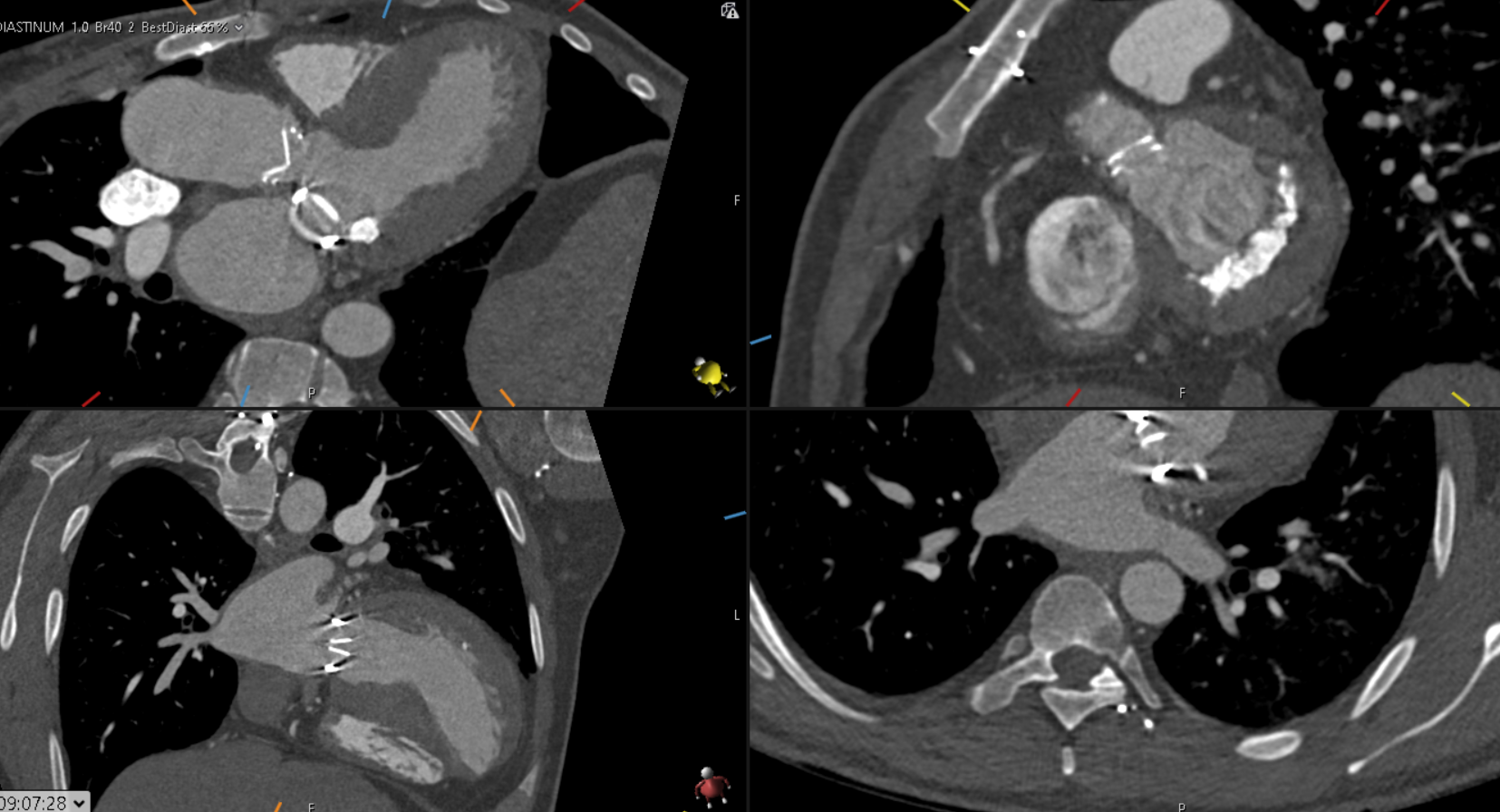
Retrospective CTCA performed with 10mg IV metoprolol given as preparation.

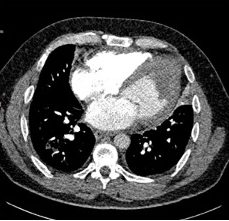
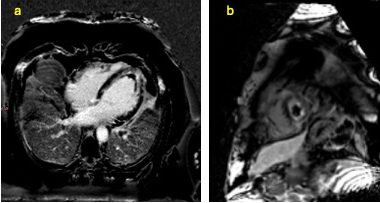
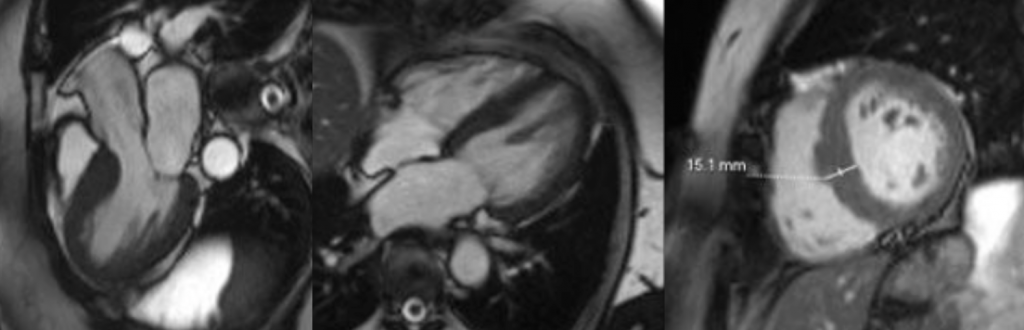
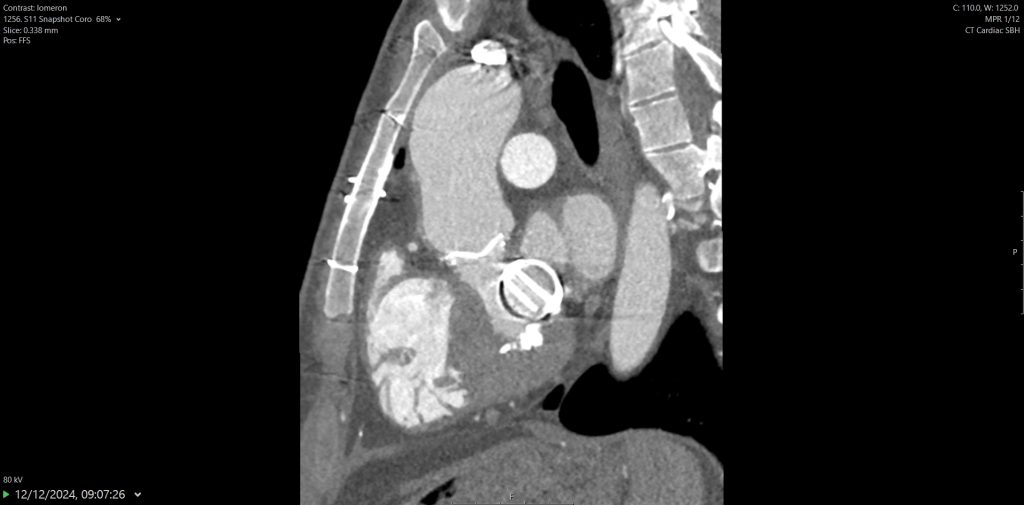
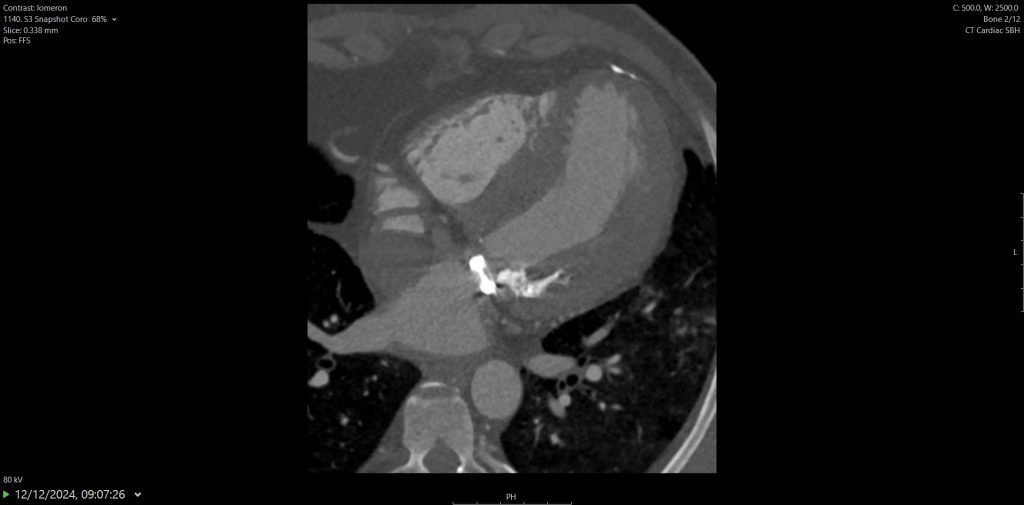
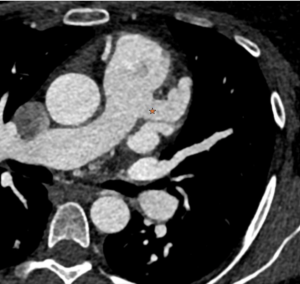
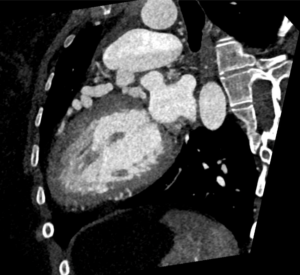
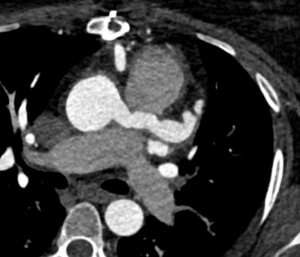
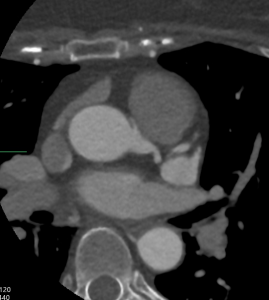
CTCA first highlights significant calcification around the mitral valve annulus not apparent on the TOE (Multi-planar reconstructions shown in Figures 1 – 3)

Figure 1

Figure 2

Figure 3

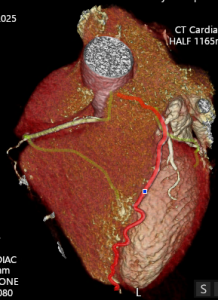
Further postprocessing using tools on cardiac function and reconstruction modules built-in the vendor software (Syngo.via) were used to produce anatomical depictions and cines of both valves. Valve cines showed valves seen to open and close normally. No pannus/ thrombus.


CT scan informed MDT decision, which were reassured that the valve is opening and closing normally. Increased warfarin range to 2.5 – 3.5 to avoid possibility of thrombus. Under regular follow up with serial echocardiograms.

Not the end of the story……

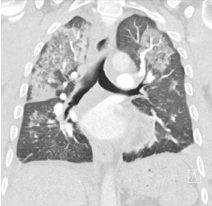
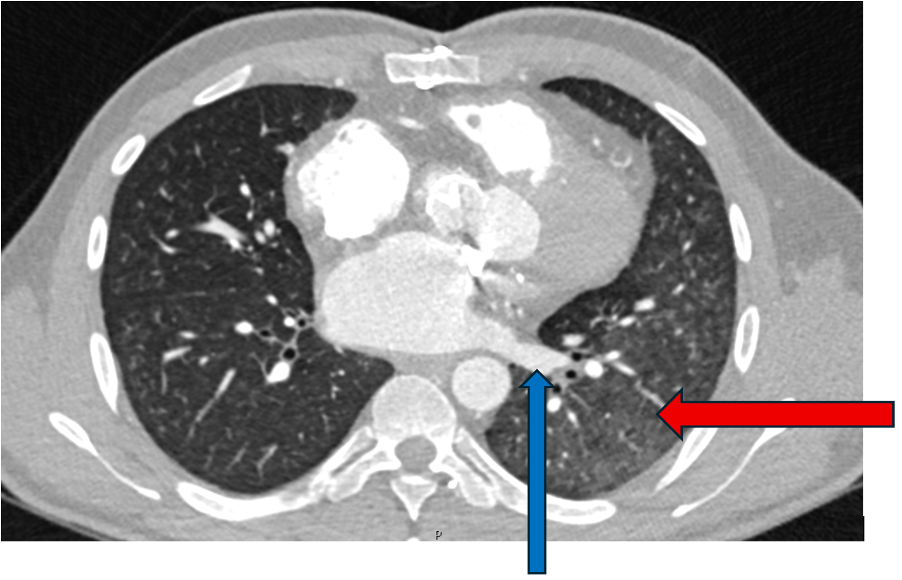
Figure 4

Lung imaging on cardiac CT showed left-sided asymmetrical pulmonary oedema (see red arrow).

This is a very rare presentation thought to be due to congestion in the common left pulmonary vein (blue arrow) secondary to turbulent blood flow around the posterior mitral valve leaflet.


Discussion:


Use of CT to assess valves (especially prosthetic) is supported as an adjunct imaging modality when echo is not able to assess fully (acoustic shadowing can impact image quality in echo). Radiation is a concern but can be limited by controlling HR (when appropriate) and dose modulation. Photon counting scanners coming online can potentially improve further.


Quiz:


  1. Which of the following is a recognised advantage of cardiac CT cine reconstructions in evaluating suspected prosthetic valve obstruction?
    A. They can quantify mitral valve mean gradient more accurately than Doppler
    B. They demonstrate dynamic leaflet motion throughout the cardiac cycle despite prosthesis-related ultrasound artefact
    C. They eliminate the need for TOE in all patients with suspected valve thrombosis
    D. They provide better assessment of valvular regurgitation direction than colour Doppler


2. When evaluating suspected prosthetic valve obstruction on cardiac CT, which imaging characteristic helps distinguish pannus from thrombus?

A. Thrombus typically has higher CT attenuation (Hounsfield units) than pannus
B. Pannus usually appears as a low-attenuation mass without leaflet restriction
C. Pannus demonstrates higher attenuation and is more fibrotic, whereas thrombus is lower-attenuation and may be mobile
D. Both pannus and thrombus have identical attenuation and must be diagnosed surgically


Answers and explanation:

1 – B –

Cine CT allows visualisation of valve leaflet motion frame-by-frame, even when echocardiography is limited by metallic artefact or acoustic shadowing. This makes CT particularly helpful in differentiating restricted mechanical leaflet motion from normal function, and in identifying pannus vs. thrombus.

2 – C –

On cardiac CT:

  • Pannus is dense, fibrotic, and fixed, showing higher attenuation (≈ >145 HU).
  • Thrombus is typically lower attenuation (≈ <90 HU) and may be more soft and mobile.
    CT is therefore especially helpful when echo cannot clearly differentiate the two due to acoustic shadowing.


References:

  1. 2021 ESC/ EACTS Guidelines for the management of valvular heart disease. Alec Vahanian, Friedhelm Beyersdorf, Fabien Praz, Milan Milojevic, Stephan Baldus, Johann Bauersachs, Davide Capodanno, Lenard Conradi, Michele De Bonis, Ruggero De Paulis, Victoria Delgado, Nick Freemantle, Martine Gilard, Kristina H Haugaa, Anders Jeppsson, Peter Jüni, Luc Pierard, Bernard D Prendergast, J Rafael Sádaba, Christophe Tribouilloy, Wojtek Wojakowski, ESC/EACTS Scientific Document Group , ESC National Cardiac Societies , 2021 ESC/EACTS Guidelines for the management of valvular heart disease: Developed by the Task Force for the management of valvular heart disease of the European Society of Cardiology (ESC) and the European Association for Cardio-Thoracic Surgery (EACTS), European Heart Journal, Volume 43, Issue 7, 14 February 2022, Pages 561–632, https://doi.org/10.1093/eurheartj/ehab395
  2. 2024 ACC/ AHA Guidelines for valve disease. Jneid H, Chikwe J, Arnold SV, Bonow RO, Bradley SM, Chen EP, Diekemper RL, Fugar S, Johnston DR, Kumbhani DJ, Mehran R, Misra A, Patel MR, Sweis RN, Szerlip M. 2024 ACC/AHA clinical performance and quality measures for adults with valvular and structural heart disease: A report of the American Heart Association/American College of Cardiology Joint Committee on Performance Measures. Circulation: Cardiovascular Quality and Outcomes. 2024 Apr;17(4):e000129. doi:10.1161/HCQ.0000000000000129
  3. Schnyder PA, Sarraj AM, Duvoisin BE, et al. Pulmonary edema associated with mitral regurgitation: prevalence of predominant involvement of the right upper lobe. https://doi.org/102214/ajr16118517316. American Public Health Association; 2013;161(1):33–36. doi: 10.2214/AJR.161.1.8517316.
  4. Woolley K, Stark P. Pulmonary Parenchymal Manifestations of Mitral Valve Disease1. https://doi.org/101148/radiographics194.g99jl10965. Radiological Society of North America ; 1999;19(4):965–972. doi: 10.1148/RADIOGRAPHICS.19.4.G99JL10965.
  5. Rice J, Roth SL, Rossoff LJ. An unusual case of left upper lobe pulmonary edema. Chest. American College of Chest Physicians; 1998;114(1):328–330. doi: 10.1378/chest.114.1.328.

Image of the Month October 2025: Anomalous Origin of the Left Anterior Descending Artery from the Main Pulmonary Artery ( ALCAPA): Incidental Diagnosis in Adulthood

Author:

Dilan Sanli

University Hospital Southampton NHS Foundation Trust


Case Summary

A 31-year-old woman with a history of two previous uncomplicated pregnancies was scheduled for elective ovarian cyst removal last year. On the day of surgery, a cardiac murmur was incidentally detected, prompting further cardiac evaluation.

She denied any significant cardiac symptoms, including chest pain or exertional chest tightness. She described herself as not particularly physically active but otherwise in good general health. Her BMI was elevated at 34 kg/m², with no traditional cardiovascular risk factors. She reported occasional non-specific palpitations over the preceding 3–6 months, each episode lasting up to 48 hours, but denied presyncope, syncope, increasing fatigue, or lethargy. She was a lifelong non-smoker and abstained from alcohol. There was no history of hypertension, diabetes, renal, or hepatic disease.

On examination, cardiovascular findings were unremarkable — normal heart sounds with no audible murmur.


Investigations

Echocardiography (multiple transthoracic studies and one transoesophageal) revealed:

· Flow directed towards the main pulmonary artery

· Systolic and diastolic flow along the interventricular septum

· Markedly dilated right coronary artery (RCA)

· Left ventricle (LV) visually mildly dilated with mild systolic dysfunction for age

The findings were suspicious for either a coronary artery fistula or, more likely, anomalous left coronary artery arising from the pulmonary artery (ALCAPA), with extensive collateralization between the right and left coronaries.

A CT coronary angiogram confirmed the diagnosis:

· The left mainstem originated from the main pulmonary artery (MPA)

· The left coronary artery (LCA) was markedly dilated without plaque or stenosis

· The RCA was markedly dilated and tortuous, supplying multiple collaterals to the LCA

A cardiac MRI with stress perfusion showed:

· Overall normal LV size and function

· Minor focal hypokinesis and relative myocardial thinning at basal to mid anterior and anteroseptal segments

· No LV dilatation or hypertrophy

· No late gadolinium enhancement, indicating absence of prior infarction


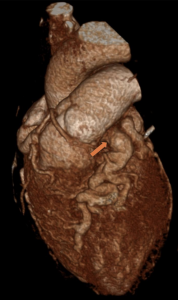
Figure 1: Demonstrates LAD, originates from the main Pulmonary Artery leading to dilated and tortuous left anterior descending (LAD) artery.


Figure 2: 3D demonstration of the main pulmonary origin of the LAD.


Figure 3: Demonstrates enlarged tortuous intercoronary collateral arteries along epicardial surface of heart.


Figure 4: Demonstrates a cross-sectional view of the coronary anatomy of the patient.


Figure 5: Take a note of the change of the contrast opacification from the right ventricular outflow tract into the main pulmonary artery due to reversal of flow.


Figure 6: Following the corrective surgery, the left coronary arises from the ascending aorta and is tunnelled through the main pulmonary artery trunk.


Discussion:

Anomalous Left Coronary Artery from the Pulmonary Artery (ALCAPA) is a rare congenital cardiac anomaly, accounting for only 0.25–0.5% of all congenital heart defects.

In utero and for several weeks after birth, the coronary circulation is adequately perfused due to the high neonatal pulmonary vascular resistance (PVR) and the presence of the patent ductus arteriosus (PDA). Though the myocardium is perfused with desaturated blood from the pulmonary artery, this is adequate to maintain myocardial oxygen delivery and adequate ventricular function. With ductal closure and a progressive decline in PVR in the first two to three months of life, coronary flow reverses due to the lower pressure in the pulmonary circulation, producing a left-to-right shunt and a coronary steal phenomenon, resulting in decline in myocardial perfusion. Without sufficient collateralization from the RCA, this leads to myocardial ischemia, LV dysfunction, and infarction within weeks to months of life.

In infancy, ALCAPA typically presents as Bland-White-Garland syndrome, characterized by crying during feeds (angina equivalent), diaphoresis, tachypnoea, and grunting. Infants may feed briefly (“snackers”) and show signs of fatigue, pallor, or failure to thrive. In adults, presentation is variable; ranging from asymptomatic cases discovered incidentally, to exertional dyspnoea, arrhythmia, or sudden cardiac death.

ALCAPA is characterized by a chronically ischemic but potentially viable myocardium. If uncorrected, mortality is extremely high; however, survival into adulthood may occur in rare cases with well-developed collaterals. Chronic subendocardial ischemia and fibrosis increase the risk of sudden cardiac death due to ventricular arrhythmias.


Management

Diagnosis of ALCAPA constitutes an absolute indication for surgical correction, with the goal of establishing a two-coronary-artery system. The preferred approach is direct reimplantation of the LCA into the aorta. If this is not technically feasible, alternative options include creation of an intrapulmonary tunnel (Takeuchi procedure) or other revascularization techniques.


Teaching Points

· ALCAPA should be considered in any infant with dilated cardiomyopathy or myocardial ischemia without obstructive coronary disease.

· In adults, prominent coronary collaterals and an enlarged RCA should raise suspicion.

· CT and MRI provide detailed anatomic and functional assessment, complementing echocardiography.

· Early diagnosis and surgical revascularization are lifesaving and prevent irreversible myocardial damage.


QUIZ:

1) A 4-month-old infant with anomalous origin of the left coronary artery from the pulmonary artery (ALCAPA), severe mitral regurgitation, and a dilated left ventricle with severely diminished ventricular function is admitted to the cardiac ICU in severe congestive heart failure. The mitral valve papillary muscles are noted to be echo-bright. In patients with ALCAPA, which of the following co-existing lesions is MOST LIKELY to be associated with a less severe degree of myocardial ischemia?

A. Mitral regurgitation

B. Atrial septal defect

C. Ventricular septal defect

D. Pulmonary stenosis


2) Which of the following is the most associated valvular abnormality in ALCAPA?

A. Mitral Regurgitation

B. Tricuspid Regurgitation

C. Aortic Regurgitation

D. Pulmonary stenosis


Answers:

  1. C – Explanation: Associated anomalies, such as a PDA or ventricular septal defect (VSD), lead to a gradual increase in left to right intracardiac shunt as PVR falls and thus, increased PVR related to increased blood flow. This may create a “protective” effect on the ventricular muscle by maintaining higher coronary perfusion pressure and myocardial oxygen delivery.
  2. A – Explanation: Myocardial ischaemia leads to LV dilatation which leads to mitral regurgitation.


References:

1. https://radiopaedia.org/articles/anomalous-left-coronary-artery-from-the-pulmonary-artery

2. Yu J, Ren Q, Liu X, et al. Anomalous left coronary artery from the pulmonary artery: Outcomes and management of mitral valve. Front Cardiovasc Med. 2022;9:953420. doi: 10.3389/fcvm.2022.953420

3. Cottrill CM, Davis D, McMillen M, O’Conner WN, Noonan JA, Todd EP. Anomalous Left Coronary Artery from the Pulmonary Artery: Significance of Associated Intracardiac Defects. J Am Coll Cardiol. 1985; 6: 237-242.

4. https://heart.bmj.com/content/83/1/e2

Image of the Month September 2025: Anomalous origin of the Right Coronary Artery from the Left Sinus of Valsalva: a rare case of coronary anomaly

Author

Dr Phyo Khaing, British Heart Foundation Centre of Research Excellence, University of Edinburgh, United Kingdom


Case history:

A 61-years old lady underwent a research computed tomography coronary angiogram (CTCA) as per the allocated trial randomisation. She was generally fit and well, and has a history of mild hypercholesterolaemia. Her research CTCA revealed an incidental finding of a rare coronary anomaly with no evidence of coronary atheroma. She had an anomalous origin of the right coronary artery arising from the left sinus of Valsalva with an intra-arterial course. Given she was entirely asymptomatic at the age of 61, her risk of sudden cardiac death was deemed low and she was managed conservatively.

Discussion:

Coronary artery anomalies are rare congenital variations, often detected incidentally during CT coronary angiography and are present in less than 2% of the population1. The incidence of anomalous origin of the right coronary artery is more common than anomalous origin of the left coronary artery2. Although patients are usually asymptomatic, coronary anomalies can present with exertional syncope, angina, palpitations and sudden cardiac death depending on the level of patient’s activity and course of the vessel. Certain anatomical features are typically considered higher risk, and these include an acute angulation at the coronary origin, a slit-like ostium, an initial intramural course within the aortic wall, and an interarterial course between the aorta and pulmonary trunk3.


Previous research based on a registry of 6.3 million military recruits showed that among 126 non-traumatic deaths, 21 were attributed to coronary artery anomalies4. Amongst all these coronary artery anomaly deaths, the abnormality was the left coronary artery arising from the right coronary sinus with an interarterial course.


Several mechanisms have been proposed to explain the myocardial ischaemia and sudden cardiac death in anomalous interarterial courses. These include dynamic compression of the coronary artery between the great vessels during intense exertion, transient occlusion at the ostium due to an acute angulation, and hypoplasia of the anomalous coronary artery at its ostium5.


In contrast to left sided coronary anomalies, an anomalous right coronary artery arising from the left sinus of Valsalva is generally considered to have a more favourable prognosis. In this case, the risk of sudden cardiac death is lower when identified later in life without any troublesome symptoms.


Questions:

What does ALCAPA stand for?

  1. Anomalous Left Coronary Artery from the Pulmonary Artery
  2. Anomalous Left Circumflex Artery from the Pulmonary Artery
  3. Anomalous Left Coronary Artery from the Posterior Aorta
  4. Anomalous Left Circumflex Artery from the Posterior Aorta


Which surgical approach is commonly used to treat a high risk coronary anomaly if necessary?

  1. Aortic root replacement
  2. Septal myectomy
  3. Coronary unroofing
  4. Shunting


Which of the following courses is generally considered benign?

  1. Interarterial course
  2. Intramural course
  3. Retroaortic course
  4. Acute angle takeoff


Answers: a, c, c


References:

  1. Cheezum MK, Ghoshhajra B, Bittencourt MS, Hulten EA, Bhatt A, Mousavi N, Shah NR, Valente AM, Rybicki FJ, Steigner M, Hainer J, MacGillivray T, Hoffmann U, Abbara S, Di Carli MF, DeFaria Yeh D, Landzberg M, Liberthson R, Blankstein R. Anomalous origin of the coronary artery arising from the opposite sinus: prevalence and outcomes in patients undergoing coronary CTA. Eur Heart J Cardiovasc Imaging. 2017 Feb;18(2):224-235. doi: 10.1093/ehjci/jev323. Epub 2016 Feb 3. PMID: 26848152; PMCID: PMC6279103.
  2. Heo W, Min HK, Kang DK, Jun HJ, Hwang YH, Lee HC. Three different situations and approaches in the management for anomalous origin of the right coronary artery from the left coronary sinus: case report. J Cardiothorac Surg. 2014 Jan 23;9:21. doi: 10.1186/1749-8090-9-21. PMID: 24450442; PMCID: PMC3902410.
  3. Bhatia, R.T., Forster, J., Ackrill, M.et al.Coronary artery anomalies and the role of echocardiography in pre-participation screening of athletes: a practical guide. Echo Res Pract 11, 5 (2024). https://doi.org/10.1186/s44156-024-00041-4
  4. Eckart RE, Scoville SL, Campbell CL, Shry EA, Stajduhar KC, Potter RN, Pearse LA, Virmani R. Sudden death in young adults: a 25-year review of autopsies in military recruits. Ann Intern Med. 2004 Dec 7;141(11):829-34. doi: 10.7326/0003-4819-141-11-200412070-00005. PMID: 15583223.
  5. Fuglsang S, Heiberg J, Byg J, Hjortdal VE. Anomalous origin of the right coronary artery with an interarterial course and intramural part. Int J Surg Case Rep. 2015;14:92-4. doi: 10.1016/j.ijscr.2015.07.018. Epub 2015 Jul 28. PMID: 26255002; PMCID: PMC5963140.

Image of the Month August 2025: ‘Incidental’ finding of LV thrombus in an acutely unwell patient

Author

Dr Ekene Kenneth Okonkwo1

1 Royal Liverpool University Hospital


Case history

67-year-old male patient presented with hypotension, abdominal pain and raised lactate levels. He had a background of previous stroke and left ventricular systolic dysfunction.

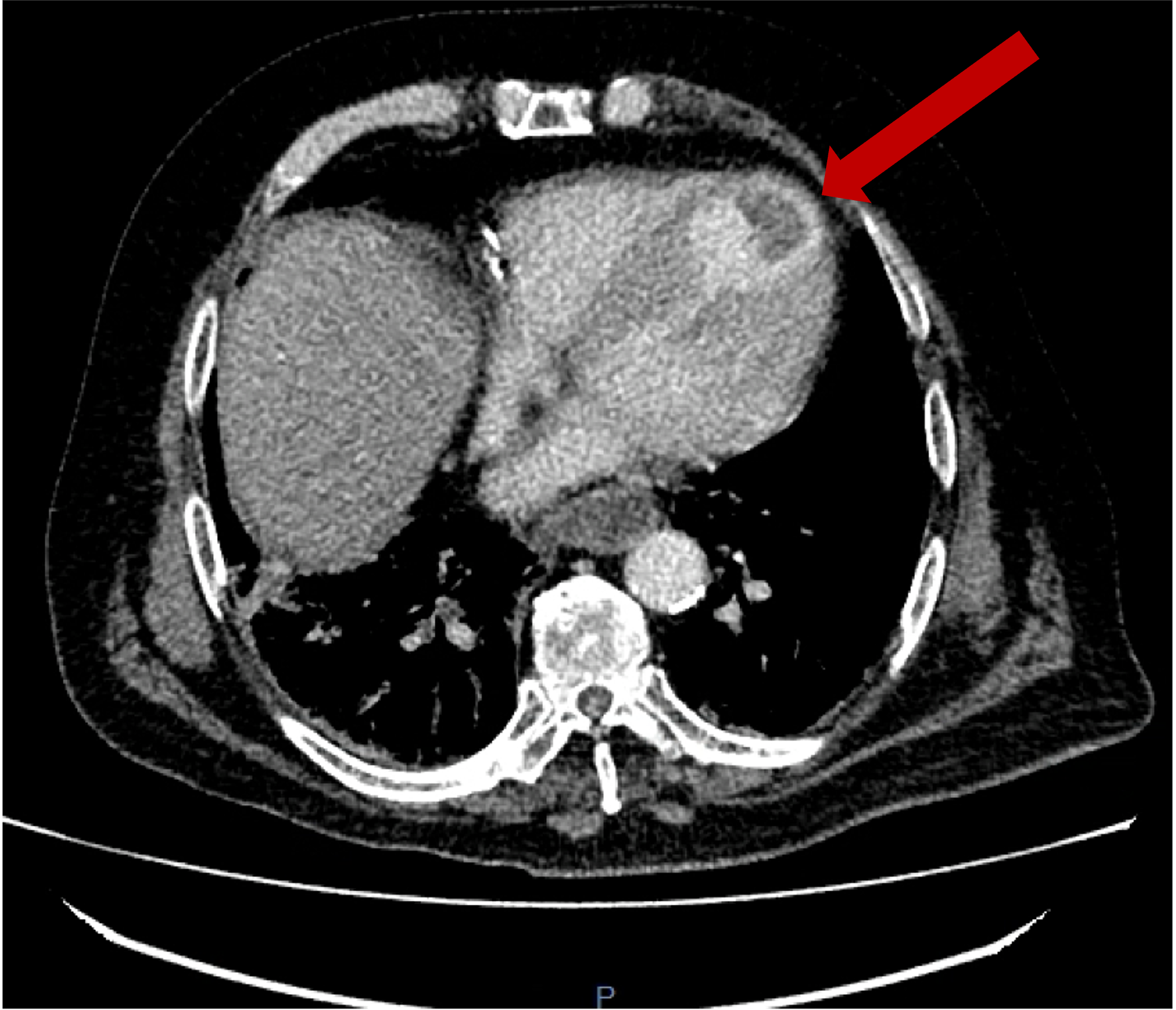
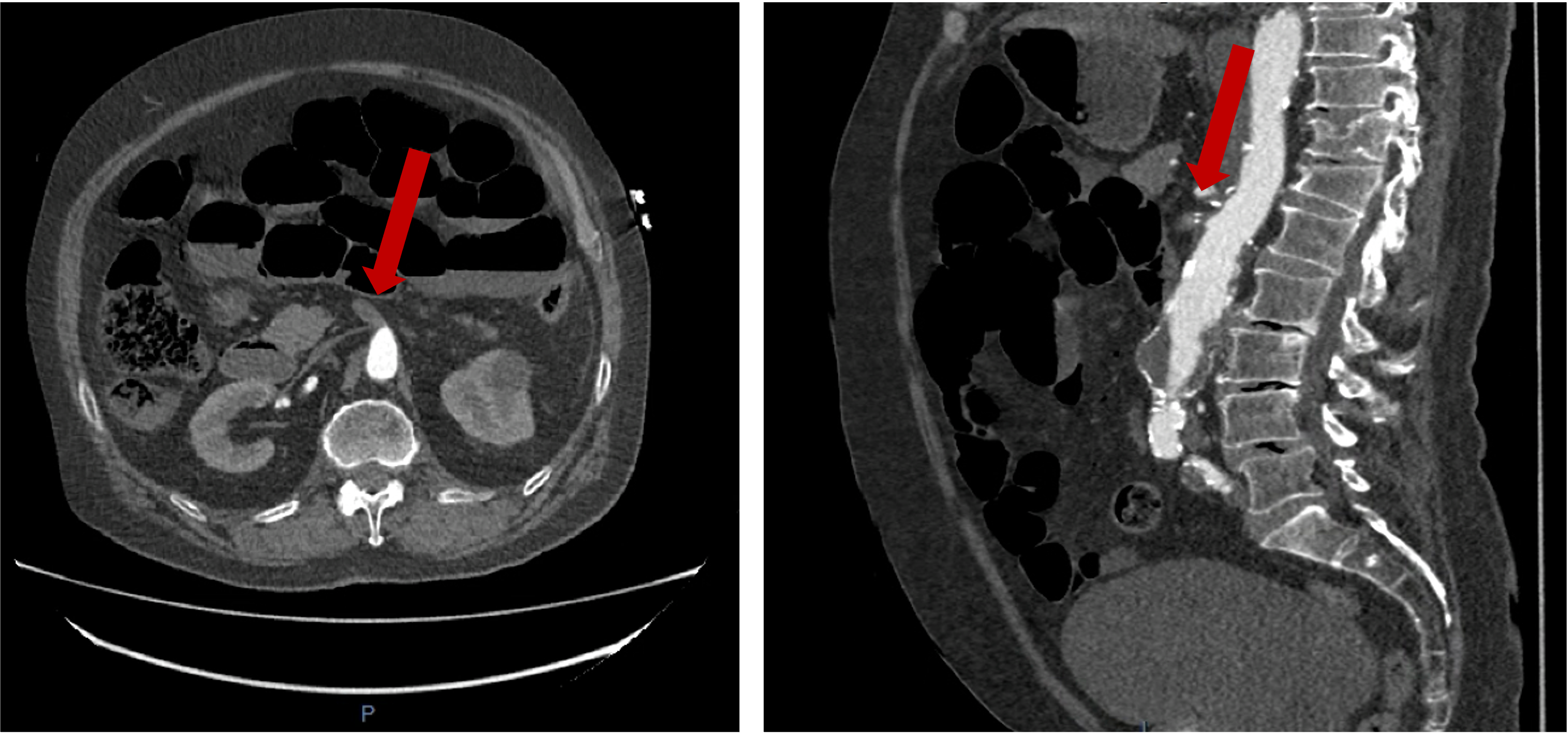
An urgent CT scan of the abdomen and pelvis in arterial and portal venous phases was done which showed a filling defect in the LV apex consistent with an apical thrombus. He also had an abdominal aortic aneurysm with mural thrombus and a proximally occluded superior mesenteric artery causing bowel ischaemia.

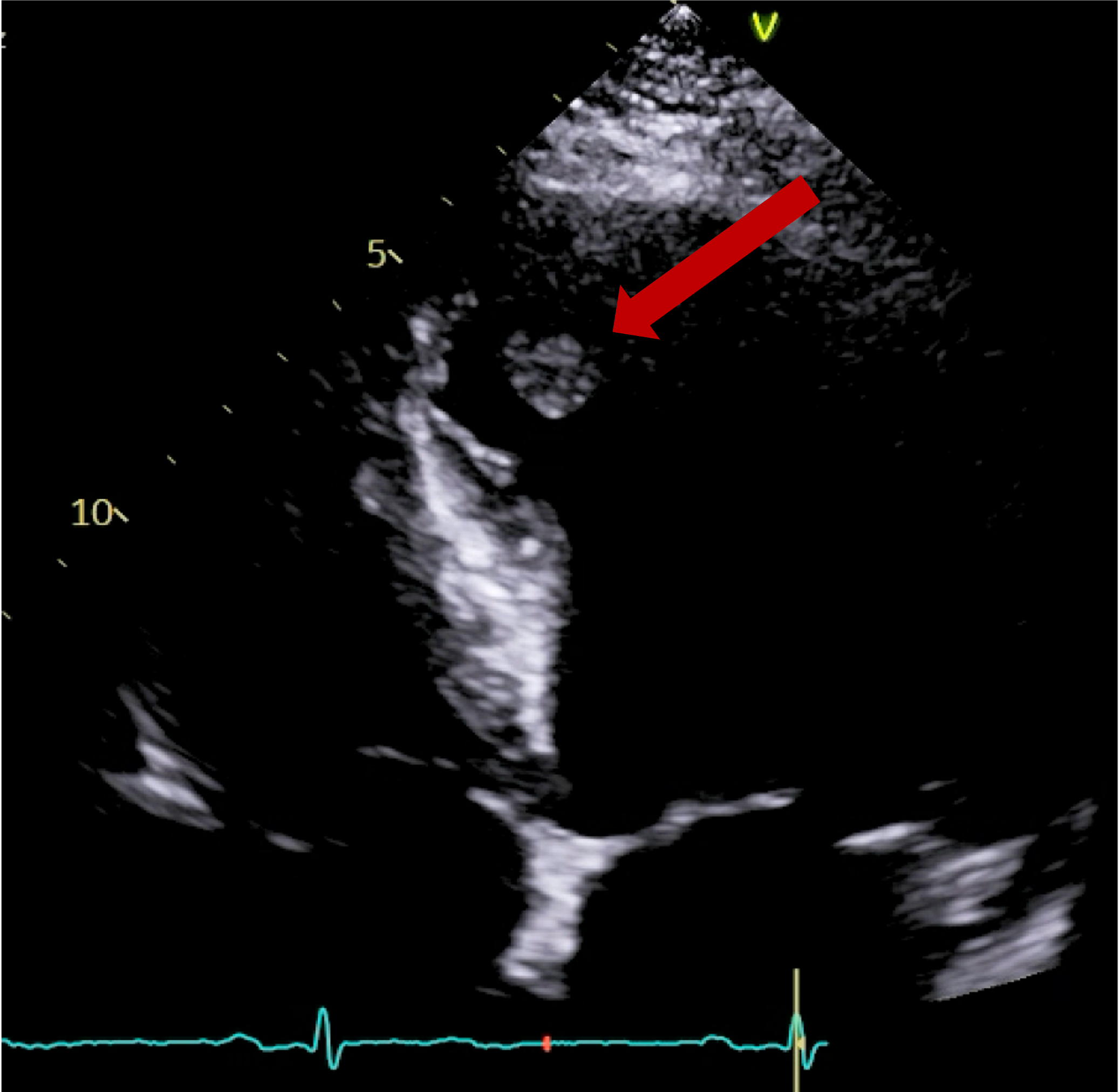
The patient had previously had a transthoracic echocardiogram a few months ago and was started on warfarin for the LV thrombus but this information was not communicated to the reporting radiologist at the time of the urgent CT abdomen and pelvis study.

This article highlights the importance of reviewing all available images of the heart on every CT of the abdomen and pelvis.

Arterial phase axial CT image of the lower chest showing a left ventricular apical thrombus.


Transthoracic echocardiogram – apical 4-chamber view showing an apical thrombus in the left ventricle.


Arterial phase CT imaging of the abdomen showing thrombus in the proximal superior mesenteric artery on both axial and sagittal images.


Questions

Which one of the following statements is false?

  1. Severely impaired LV ejection fraction is a strong predictor of LVT formation after MI.
  2. Patients with dilated cardiomyopathy have a higher prevalence of thrombus than patients with ischaemic cardiomyopathy.
  3. Elevated D-dimer levels and reduced LV ejection fraction have been independently associated with an increased risk LV thrombus.
  4. Hypertrophic cardiomyopathy does not increase the risk of LV thrombus due to the increased myocardial LV wall thickness.
  5. LV thrombus is mostly diagnosed incidentally on transthoracic echocardiography.

Which statement is most accurate?

  1. Pedunculated LV thrombi are at greater risk of embolic phenomenon compared with mural thrombus.
  2. Transoesophageal echocardiography is particularly useful in detecting LV thrombus.
  3. Contrast enhanced transthoracic echocardiography has no role in detection of LV thrombi.
  4. Contrast enhanced cardiac CT should never be used in detection of left sided cardiac thrombus because of high radiation dose.
  5. Tissue characterisation of left sided cardiac thrombi is excellent with contrast enhanced cardiac CT.

Regarding the role of CMR (cardiac magnetic resonance) in detecting LV thrombus, which one the following statements is false?

  1. CMR is considered the best imaging technique for detection of LV thrombus.
  2. CMR is great for tissue characterisation.
  3. CMR has high spatial and temporal resolution as well as high soft tissue contrast.
  4. CMR is particularly helpful in acutely unwell patients who cannot undergo transthoracic echocardiography.
  5. CMR can also assess cardiac function, valvular anatomy, and perfusion.


(Answers:d,a,d)


Reference:

1. Catalani, Filippo, et al. “Left Ventricular Thrombosis in Ischemic and Non-Ischemic Cardiomyopathies: Focus on Evidence-Based Treatment.” Journal of Clinical Medicine5 (2025): 1615.

Image of the Month July 2025: Pulmonary vein sign due to acute pulmonary embolism

Author

Marta Peverelli,1 Jason M Tarkin,1 Deepa Gopalan3

1Division of Cardiology, University of Cambridge

3Department of Radiology, Cambridge University Hospitals NHS Trust


Case history

A 53-year-old man presented to the Emergency Department with leg and chest pain, and breathlessness. Cardiorespiratory examination and electrocardiogram were normal. D-dimer was elevated (1887; NR <230 ng/mL) and COVID-19 screen negative. Ultrasound confirmed a right femoral vein thrombosis. CT pulmonary angiography showed multiple pulmonary emboli, including a large embolism in the distal right main pulmonary artery (A: transverse, C: coronal; orange arrows) causing right middle (RML) and lower lobe (RLL) occlusion. Lack of opacification in the right inferior pulmonary vein (B: transverse; D: volume-rendered; blue arrows; RIPV) was incorrectly interpreted as thrombus extending into the left atrium (LA). Echocardiography showed no thrombus. Hypodense pulmonary vein filling defects on CT can occur in acute pulmonary embolism due to diminished venous return. Filling defects are typically observed in the lower pulmonary veins when there is proximal pulmonary artery occlusion. This appearance (known as the “pulmonary vein sign”) can mimic venous thrombosis.


Questions

  1. The ‘pulmonary vein sign’ is typically seen in the lower pulmonary veins during pulmonary arterial phase imaging [TRUE/FALSE]
    1. TRUE
    2. FALSE
  2. Which of the following is NOT a main cause of hypodense pulmonary vein filling defects on CT? [Select one option]
    1. Acute PE
    2. Proximal chronic thomboembolic pulmonary hypertension (CTEPH)
    3. PV stenosis
    4. Pulmonary arterial hypertension
    5. Acute on chronic pulmonary embolism
  1. Which are radiological features of acute pulmonary embolism on CT?
    1. Filling defects in branches of the pulmonary arterial system
    2. RV dilatation
    3. Pulmonary vein sign
    4. Pulmonary infarction
    5. All of the above


(Answers:a,d,e)


Reference:

1.         Souza, L.V.S., et al., “Pulmonary Vein Sign” for Pulmonary Embolism Diagnosis in Computed Tomography Angiography. Lung, 2017. 195(6): p. 769-774.

2.         Gopalan, D., et al., Pulmonary Vein Sign on Computed Tomography Pulmonary Angiography in Proximal and Distal Chronic Thromboembolic Pulmonary Hypertension With Hemodynamic Correlation.J Thorac Imaging, 2023. 38(3): p. 159-164.

Image of the Month June 2025: A Case of Recurrent Takotsubo Cardiomyopathy

Author

Dr Salma Selim 1, Dr Matthew Morgan1, Dr Abbas Ausami1

1 University Hospital Southampton NHS Foundation Trust.


Case history

A 65-year-old lady presented to A&E with central chest pain, nausea and clamminess. Serial troponins were raised at 175 and 1124. ECG showed dynamic anterior wall change. The patient had a background of gastroesophageal reflux disease, limited systemic sclerosis. She had a previous diagnosis of Takotsubo cardiomyopathy in 2019.   Initial bedside cardiac TTE demonstrated global hypokinesia sparing basal segments of the ventricles with ejection fraction between 5 to 10%.

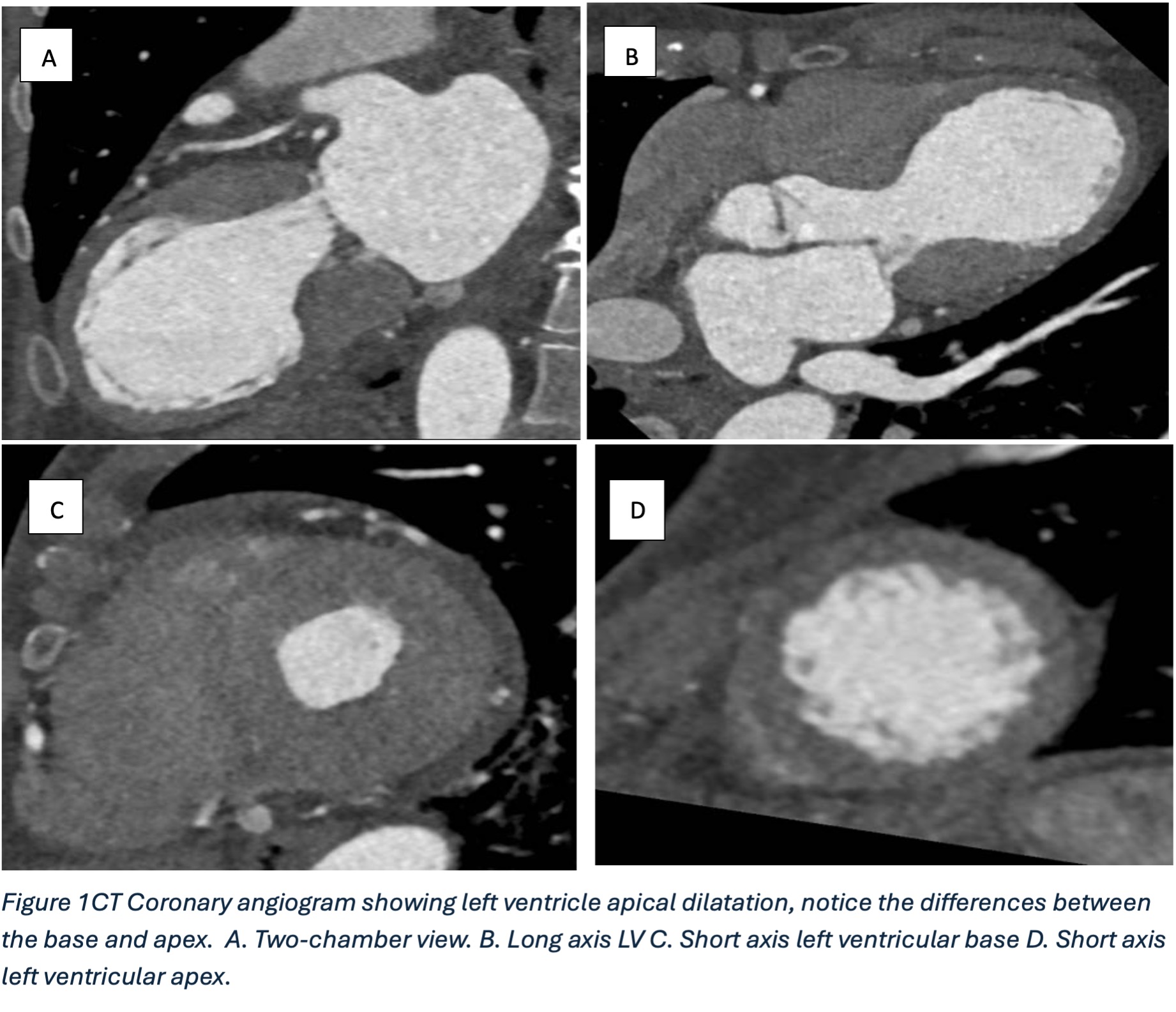
CT coronary angiogram demonstrated circumferential dilatation of the mid-to-apical left ventricular cavity.

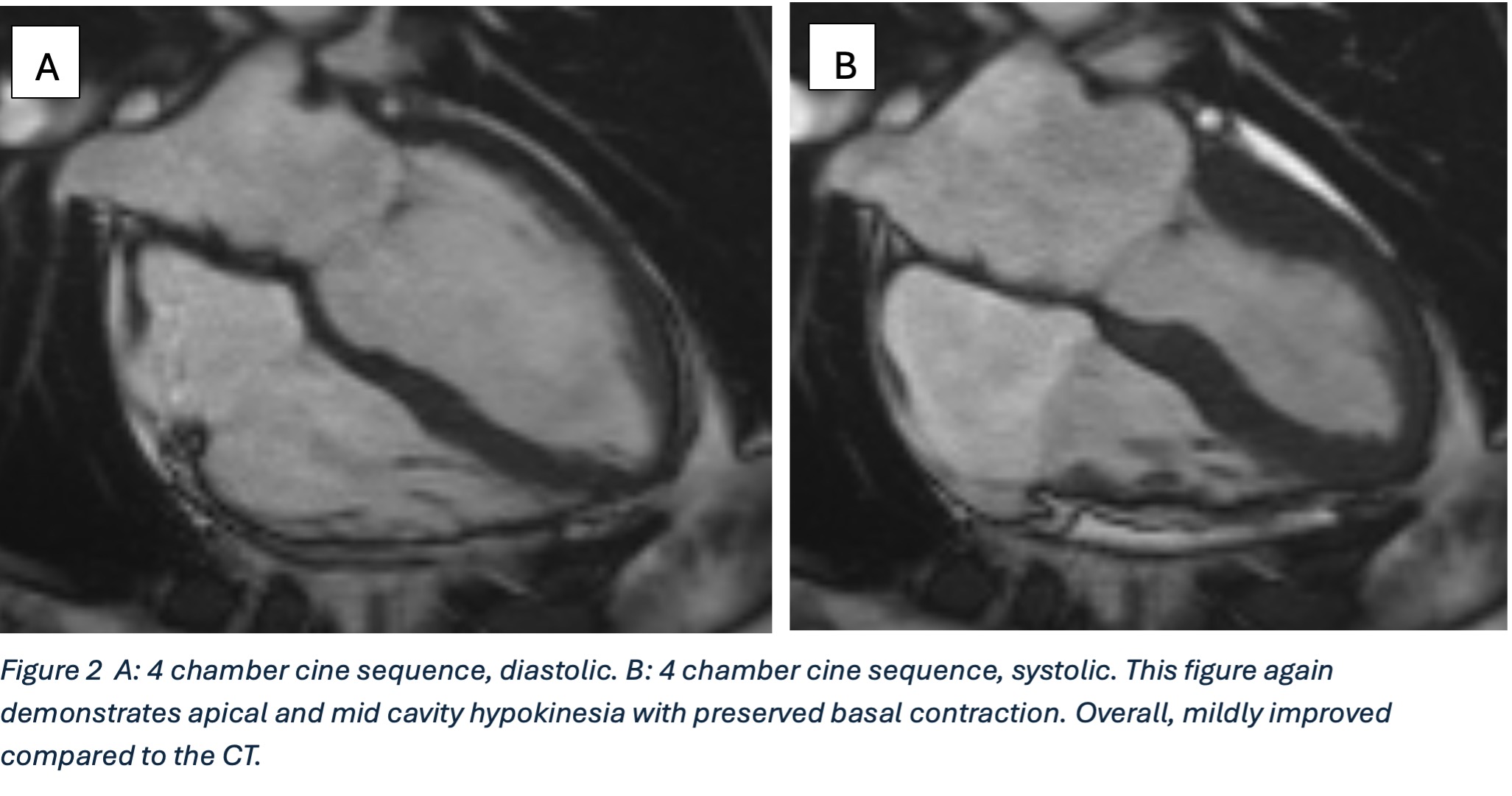
Cardiac MRI demonstrated mildly impaired resting systolic function and circumferential hypokinesis of the mid-to-distal left ventricular myocardium. Cine images demonstrated good contraction within the basal myocardial segments. The LV was not visually dilated.

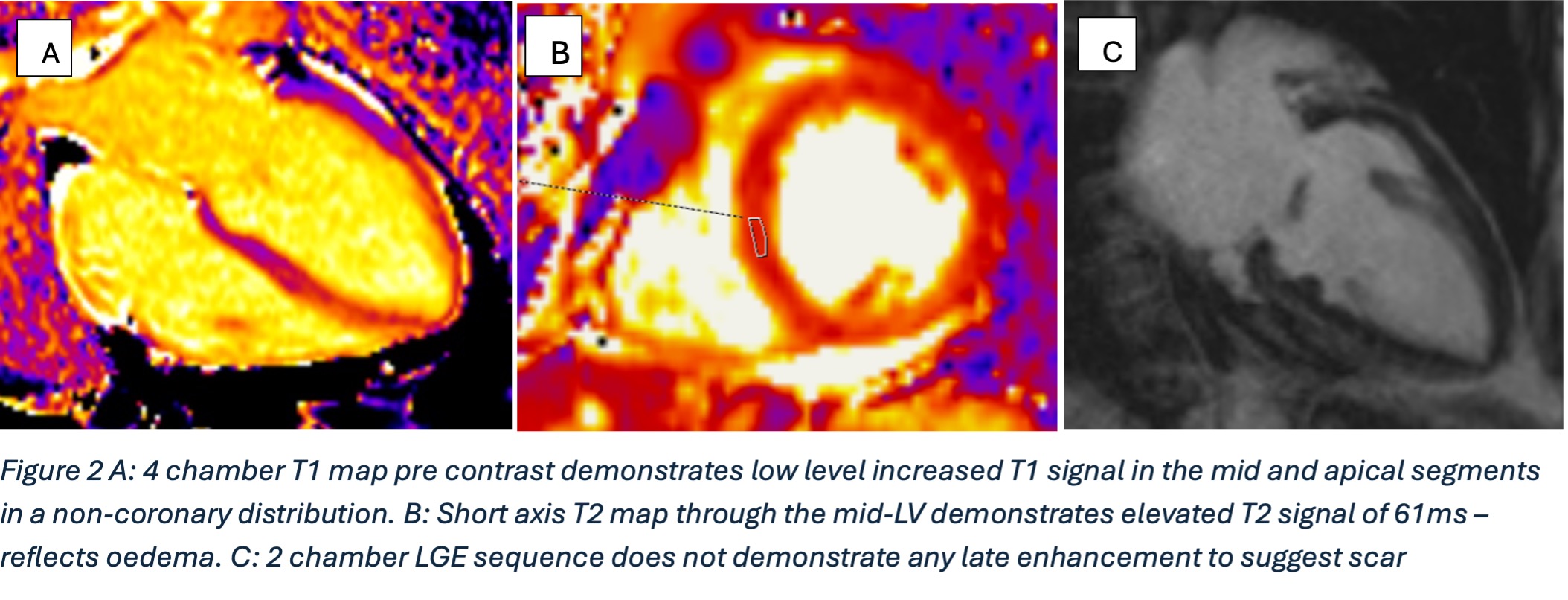
T1 mapping sequences demonstrated normal basal segment mapping times and elevated mid-distal segment mapping times. T2 images showed mid-to distal myocardial oedema and elevated T2 mapping times.

No late Gadolinium enhancement appreciated.


Questions

  What is the Echocardiographic finding that is most characteristic of Takotsubo cardiomyopathy?

  1. Concentric LV Hypertrophy
  2. Regional Wall motion abnormality in a single coronary territory.
  3. Global hypokinesia.
  4. Apical ballooning with preserved basal contraction.
  5. Right ventricular dilatation.

Which is NOT a recognised complication of Takotsubo cardiomyopathy?

  1. Infarct
  2. Congestive Heart failure
  3. LV Rupture
  4. Stroke
  5. Pericarditis

What is the most common demographic affected by Takotsubo cardiomyopathy?

  1. Young male athletes
  2. Middle aged men with diabetes
  3. Post menopausal women after emotional stress
  4. Children under the age of 4
  5. Pregnant women in first trimester


(Answers:d,e,c)


Discussion

Symptoms of Takotsubo Cardiomyopathy are similar to acute coronary syndrome. Similarities between both conditions in symptoms, ECG Changes, blood biomarkers raise difficulty distinguishing between both for clinicians. Invasive angiography typically reveals apical ballooning of the left ventricle alongside patent coronary arteries. 1

In this case, given the patient’s previous diagnosis with Takotsubo cardiomyopathy and a bedside echocardiogram showing global hypokinesia sparing the basal segment, a CT coronary angiogram was performed instead followed by a cardiac MRI. The lack of late gadolinium enhancement adds diagnostic confidence, since takotsubo remains a diagnosis of exclusion

A fundamental characteristic of takotsubo is the spontaneous recovery of the LV ejection fraction, normalises in nearly all patients over a variable period (days to weeks). However, there is a recognised early mortality of 3-5% due to arrythmias, pump failure, cardiac rupture or thromboembolic complications. There is a recognised recurrence rate, of 10%–15%, where the trigger and phenotype is typically different and the interval of time to a recurrence is unpredictable.1   In this case, the patient did not report a specific stressful event that may have triggered this episode.

On cardiac MRI, four patterns have been described: apical (most common), biventricular, mid-ventricular, and basal. Absence of bright late gadolinium enhancement and vascular territory distribution helps differentiate Takotsubo cardiomyopathy from MI. There can be a mildly increased T2 intensity signal due to myocardial oedema which typically involves the affected segments.2 Evidence of transient left ventricular dysfunction with apical “ballooning” or dyskinesis involving more than one discrete coronary artery territory is recognised as one of the diagnostic criteria for Takotsubo cardiomyopathy.3


Reference:

1 Dawson DK. Acute stress-induced (takotsubo) cardiomyopathy. Heart 2018;104:96-102. https://doi.org/10.1136/heartjnl-2017-311579

2 Weerakkody Y, Campos A, Sharma R, et al. Takotsubo cardiomyopathy. Reference article, Radiopaedia.org (Accessed on 18 May 2025) https://doi.org/10.53347/rID-25099

3 Carroll D, Campos A, Rasuli B, Takotsubo cardiomyopathy (diagnostic criteria). Reference article, Radiopaedia.org https://doi.org/10.53347/rID-94359

Image of the Month February 2025: Congenital Absence of the Pericardium: A Rare Incidental Finding with Key Imaging Insights

Author

Dr Chary Duraikannu

Consultant Radiologist, Ninewells Hospital and Medical School, NHS Tayside, Dundee, UK.


Case history

A 54-year-old male with a long-standing murmur presents for evaluation. A prior transesophageal echocardiogram revealed no septal defects but noted a slightly abnormal appearance of the mitral valve. The patient recently experienced a collapse and has a loop recorder in situ. Previous ECG findings included intraventricular conduction delay, right bundle branch block, and left axis deviation of the QRS complex, with a normal PR interval.

CT and MRI shows complete leftward deviation of heart and midline position of trachea. Interposition of lung tissue noted at aorto-pulmonary window and also discontinuous segment of pericardium in anterior aspect. The heart was otherwise structurally normal, and no intervention was carried out.


Questions

1. Which of the following are imaging features of pericardial agenesis ?

  1. Excessive levorotation
  2. Interposition of lung tissue at aortopulmonary window
  3. Discontinuous segments of the pericardium in anterior aspect
  4. Midline position of the trachea
  5. All of the above

2. Which statement is false ?

  1. Normal pericardium is 1-2mm thick
  2. Pericardium is easily identified along the posterior wall of left ventricle
  3. Pericardial agenesis can be misdiagnosed due to non-specific symptoms
  4. ECG changes include right axis deviation with incomplete RBBB
  5. None of the above

3. Which of the statement is true regarding congenital absence of the pericardium?

  1. Larger defects are typically symptomatic.
  2. Right sided pericardial defects are common than left sided defects.
  3. Risk of herniation of the left atrial appendage in smaller defects.
  4. Majority of patients require surgical intervention.
  5. Cuvier duct regression is not related to pericardial agenesis.


(Answers:e,b,c)


Discussion

Congenital absence of the pericardium is an exceedingly rare anomaly categorized as partial or total defects. Most prevalent are complete left sided defects (70%) followed by complete right sided (17%), complete bilateral (9%) and partial right or left sided (3-4%) [1,2].  Associated congenital anomalies include atrial septal defects, patent ductus arteriosus, mitral valve disease, tetralogy of fallot, and sinus venosus defects with partial anomalous pulmonary venous drainage [3].

In the 5th week of embryonic development pleuropericardial membranes fuse to form pericardium. Failure of this process occurs due to premature regression of ducts of cuvier results in pericardial agenesis [1].

Complete agenesis of pericardium is usually asymptomatic or present with non-specific symptoms. These are mostly incidental during cross sectional imaging performed for other reasons or cardiothoracic surgery [4,5]. However, smaller defects can present with chest pain and dyspnoea when lying on one side and pose risks such as herniation of the left atrial appendage or compression of the left coronary artery [4,6].

Normal pericardium is 1-2 mm in thickness and is usually seen in CT and MRI because of surrounding adipose tissue. Its visualization can be difficult posterior and lateral to left ventricle due to paucity of pericardial fat [7].

Frequently, the electrocardiogram displays bradycardia with right bundle branch block. Additionally, poor R wave progression as well as large P waves may be observed [8].

Diagnosing congenital pericardial defects often relies on indirect signs. Typical findings in cross sectional imaging include excessive levorotation with the left ventricular apex pointing posteriorly, lung interposition at the aorto-pulmonary window and between the base of the heart and the diaphragm, and discontinuous segments of pericardium along the anterior aspect and midline trachea [9,10].

In case of complete bilateral or complete left-sided absence of the pericardium, no treatment is generally indicated [1,11]. Symptomatic patients with partial defects and cardiac chamber herniation should undergo surgery. Treatment options include patch closure of the defect, pericardiectomy, or pericardioplasty [12,13].


Reference:

1.Nasser WK. Congenital diseases of the pericardium. Cardiovasc Clin. 1976;7(3):271-86. PMID: 826317.

2.Klein AL, Abbara S, Agler DA, Appleton CP, Asher CR, Hoit B, Hung J, Garcia MJ, Kronzon I, Oh JK, Rodriguez ER, Schaff HV, Schoenhagen P, Tan CD, White RD. American Society of Echocardiography clinical recommendations for multimodality cardiovascular imaging of patients with pericardial disease: endorsed by the Society for Cardiovascular Magnetic Resonance and Society of Cardiovascular Computed Tomography. J Am Soc Echocardiogr. 2013 Sep;26(9):965-1012.e15. doi: 10.1016/j.echo.2013.06.023. PMID: 23998693.

3.BremerichJ,ReddyGP,HigginsCB.Magneticresonanceimageofcardiacstructure. In: Pohost GM, O’Rourke RA, Berman D, Shah PM, eds. Imaging in Cardiovascular Disease. Philadelphia: Lippincott Williams & Wilkins; 2000. p409, 756.

4.,Bernardinello V, Cipriani A, Perazzolo Marra M, Motta R, Barchitta A. Congenital pericardial agenesis in asymptomatic individuals: tips for the diagnosis. Circ Cardiovasc Imaging 2020;13:e010169.

5.Shiikawa M, Nakahashi K, Endo M, Shiono S. [Congenital Defect of the Pericardium Incidentally Found during Surgery for Lung Cancer:Report of a Case]. Kyobu Geka. 2021 Apr;74(4):308-312. Japanese. PMID: 33831892.

6.Robin E, Ganguly S, Fowler MS. Strangulation of the left atrial appendage
through a congenital partial pericardial defect. Chest 1975;67:354–55

7.Yared K, Baggish AL, Picard MH, Hoffmann U, Hung J. Multimodality imaging of pericardial diseases. JACC Cardiovasc Imaging. 2010 Jun;3(6):650-60. doi: 10.1016/j.jcmg.2010.04.009. PMID: 20541720.

8.Abbas AE, Appleton CP, Liu PT, Sweeney JP. Congenital absence of the pericardium: case presentation and review of literature. Int J Cardiol. 2005 Jan;98(1):21-5. doi: 10.1016/j.ijcard.2003.10.021. PMID: 15676161.

9.Shah AB, Kronzon I. Congenital defects of the pericardium: a review. Eur Heart J Cardiovasc Imaging. 2015 Aug;16(8):821-7. doi: 10.1093/ehjci/jev119. Epub 2015 May 23. PMID: 26003149.

10.Iijima Y, Ishikawa M, Iwai S, Yamagata A, Motono N, Yamagishi S, Koizumi K, Uramoto H. Congenital partial pericardial defect discovered incidentally during surgery for lung cancer: a case report and literature review. BMC Surg. 2021 Dec 31;21(1):447. doi: 10.1186/s12893-021-01453-3. PMID: 34972509; PMCID: PMC8720205.

11.TanakaH,OishiY,MizuguchiY,MiyoshiH,IshimotoT,NagaseNetal.Contribution of the pericardium to left ventricular torsion and regional myocardial function in patients with total absence of the left pericardium. J Am Soc Echocardiogr 2008;21: 268 – 74.

12.Gatzoulis MA, Munk MD, Merchant N, Van Arsdell GS, McCrindle BW, Webb GD. Isolated congenital absence of the pericardium: clinical presentation, diagnosis, and management. Ann Thorac Surg. 2000 Apr;69(4):1209-15. doi: 10.1016/s0003-4975(99)01552-0. PMID: 10800821.

13.Van Son JA, Danielson DG, Schaff HV, Mullany CJ, Julsud PR, Breen JF. Congenital partial and complete absence of the pericardium. Mayo Clin Proc 1993;68:743–7.

Images of the Month January 2025: Incidental finding of congenital absence of the right coronary artery

Authors

Dr Matthew Morgan1, Dr Abbas Ausami1, Dr John Rawlins1

1-University Hospital Southampton NHS Foundation Trust, Southampton, UK


Case history

88yo male presenting with exertional breathlessness and new murmur. Initially investigated with an echo which demonstrated severe aortic stenosis and moderate aortic regurgitation. As part of his work up for TAVI (transcatheter aortic valve implantation), he was referred for coronary angiography and CT coronary angiogram. The patient was found to have a congenital absence of his RCA, with the territory being supplied by a superdominant circumflex artery.

Figure 1 – 3D CTCA reconstruction of the heart from above, demonstrating single coronary origin off the left coronary cusp.Left image: heart and coronary vessels. Right image: coronary vessels with the heart subtracted.

Figure 2 – 3D CTCA reconstruction demonstrating the posterior heart, with a dominant circumflex wrapping round the atrioventricular groove to supply the RCA territory. Left image: heart and coronary vessels. Right image: coronary vessels with the heart subtracted.

Figure 3 – Left image: Coronary angiography demonstrating cannulation of the left mainstem with LAD descending vertically and dominant circumflex wrapping round to supply the RCA territory. Right image: 3D CTCA reconstruction of the coronary arteries demonstrating the same anatomy.


Multiple choice questions

Which of the following congenital abnormalities are associated with absent RCA?

  1. Bicuspid aortic valve
  2. Atrial septal defect
  3. Aortic coarctation
  4. Hypoplastic left heart syndrome
  5. Tetralogy of Fallot


What is the most common symptom associated with absent RCA?

  1. Wheeze
  2. Sudden death
  3. Asymptomatic
  4. Palpitations
  5. Shortness of breath


What is the approximate incidence of absent RCA in the general population?

  1. 0.025%
  2. 0.25%
  3. 25%
  4. 5%
  5. 25%


Answers – 1,3,2


Discussion

Congenital absence of the RCA is a very rare anatomical variant with an estimated incidence of 0.014%-0.066%.1Patients are usually asymptomatic and it is considered a benign pathology, although it can be associated with other cardiac abnormalities such as bicuspid aortic valve, coronary artery fistula and hypertrophic cardiomyopathy.2 None of these were present in this case. Two patterns have been described: L-I pattern where the RCA territory is supplied by an extension of the circumflex artery or LAD (as in this case), and L-II pattern where the RCA territory is supplied by a branch arising from proximal LCA. The L-I pattern appears to be slightly more common and demonstrates a slightly higher incidence of acute MI.3

Previously coronary angiography was considered the gold standard of imaging, however with advances in CTCA, imaging with both modalities is considered useful in giving the most robust assessment of the coronary arteries and their neighbouring structures.3

There is no defined guideline for treatment, which may consist of either conservative or interventional management depending on the severity of coronary atherosclerosis and stenosis. In this case, the symptoms were all felt to be related to the patient’s severe aortic valve disease and he is being worked up for a TAVI.


References:

  1. Zhu XY, Tang XH. Congenital absence of the right coronary artery: A case report. World J Clin Cases2022; 10(34): 12799-12803 [PMID: 36579109 DOI: 12998/wjcc.v10.i34.12799]
  2. Canan, A. and Batra, K., 2022. Superdominant Left Circumflex Artery with Absent Right Coronary Artery. Radiology, 304(2), pp.294-294.
  3. Chen Z, Yan J, Han X, Adhikari BK, Zhang J, Zhang Y, Sun J, Wang Y. Congenital absence of the right coronary artery with acute myocardial infarction: report of two cases and review of the literature. J Int Med Res. 2020 Dec;48(12):300060520971508. doi: 10.1177/0300060520971508. PMID: 33275472; PMCID: PMC7720338.

Image of the month August 2022: Absent left circumflex coronary artery with super-dominant right coronary artery: An extremely rare finding on Computed Tomography Coronary Angiography

Dr Chrysovalantou Nikolaidou1, Dr Andrew D Kelion1

1Radcliffe Department of Medicine, Division of Cardiovascular Medicine, John Radcliffe Hospital, Oxford.


Case history

A 92-year-old woman presented for gated cardiovascular computed tomography for assessment of the aortic annulus and root, coronary arteries and peripheral vascular access prior to Transcatheter Aortic Valve Implantation (TAVI). She had been diagnosed with severe aortic valve stenosis during a routine pre-operative check for treatment of bladder tumours. Her previous medical history included permanent pacemaker implantation for symptomatic second degree atrioventricular block, and paroxysmal atrial fibrillation.

The CT coronary angiogram revealed very unusual coronary anatomy, with complete absence of the left circumflex artery (LCx) (Figure 1, Video 1). There was a huge dominant right coronary artery (RCA), supplying the posterior descending artery and then continuing around the atrio-ventricular groove as a large posterolateral branch to the lateral left ventricular wall. The left coronary artery / left anterior descending artery (LAD) had a normal origin and course (Video 2). There was calcified and mixed plaque disease in both coronary arteries, but no significant luminal stenosis.


Figure 1. Huge right coronary artery supplying the posterior descending artery and then continuing as a large posterolateral branch to the lateral left ventricular wall, as seen on multiplanar reformation (A), maximum intensity projection (B, C) and 3D-volume rendered (D-F) images (white arrows). No left circumflex artery is seen in the left atrio-ventricular groove. The left coronary artery / left anterior descending artery has normal origin and course (white arrowheads), as seen on 3D reconstruction of the coronary artery tree, from the anterior (E) and posterior (F) aspect of the aortic root. Pacemaker wires are also seen in Panel D (white arrowhead).


Video 1: Absence of LCx artery

Video 2: LCA and LAD with a normal anatomy


Questions

  1. Which is the most common congenital coronary artery anomaly?
  1. Congenital absence of the LCx
  2. Origin of the circumflex artery from the RCA or right sinus of Valsalva
  3. Congenital absence of the RCA
  4. Anomalous RCA originating from the LAD or LCx


Answer: B


  1. Which is the most common clinical presentation of coronary artery anomalies?
  1. Chest pain
  2. Sudden cardiac death
  3. Heart failure
  4. Asymptomatic / incidental finding


Answer: D


  1. Congenital absence of the LCx:
  1. Is generally a benign condition
  2. Has been associated with sudden cardiac death
  3. Is a very common congenital coronary artery anomaly
  4. Is an extremely rare anomaly of the coronary arteries


Answers: A, D


Discussion

Congenital coronary artery anomalies may involve the origin, course, and/or structure of the coronary arteries. Their estimated prevalence varies from less than 1% of the general population to 5.8% in the most recent studies using advanced cardiac imaging (1). Most of them are diagnosed incidentally on imaging studies. The most common coronary artery abnormality, excluding separate ostia of the LAD and LCx, is anomalous origin of the circumflex artery from the RCA or right sinus of Valsalva (2). Congenital absence of the LCx is an extremely rare anomaly of the coronary arteries, with an estimated incidence of less than 0.003% to 0.0067% (3, 4). Patients with an absent LCx usually have a large, super-dominant RCA, which supplies blood to the areas of the myocardium usually supplied by the LCx (5). Other concomitant congenital coronary artery anomalies have also been described. Absence of LCx is generally a benign condition. The most common presenting symptom in the majority of cases described in the literature was exertional chest pain. No cases of sudden cardiac death have been reported (3).

Cardiac CT can reliably diagnose congenital coronary artery anomalies, including absence of the LCx, which can be misdiagnosed as ostial occlusion on conventional coronary angiography.


References

  1. Pérez-Pomares JM, de la Pompa JL, Franco D, Henderson D, Ho SY, Houyel L, et al. Congenital coronary artery anomalies: a bridge from embryology to anatomy and pathophysiology—a position statement of the development, anatomy, and pathology ESC Working Group. Cardiovascular Research. 2016;109(2):204-16.
  2. Yuksel S, Meric M, Soylu K, Gulel O, Zengin H, Demircan S, et al. The primary anomalies of coronary artery origin and course: A coronary angiographic analysis of 16,573 patients. Exp Clin Cardiol. 2013;18(2):121-3.
  3. Fugar S, Issac L, Okoh AK, Chedrawy C, Hangouche NE, Yadav N. Congenital Absence of Left Circumflex Artery: A Case Report and Review of the Literature. Case Rep Cardiol. 2017;2017:6579847.
  4. Shaikh SSA, Deshmukh V, Patil V, Khan Z, Singla R, Bansal NO. Congenital Absence of the Left Circumflex Artery With Super-Dominant Right Coronary Artery: Extremely Rare Coronary Anomaly. Cardiol Res. 2018;9(4):264-7.
  5. Rawala MS, Ahmed AS, Iqbal MA, Iqbal A, Budde PK, Rizvi SB. Congenital anomaly of coronary artery: absence of left circumflex artery. Journal of Community Hospital Internal Medicine Perspectives. 2019;9(2):140-2.


Image of the month April 2022- Bean in a bag: a rare case of large pericardial haematoma

Mr Dilliram Adhikari1, Mrs Vimbai Tungwarara1, Dr Badrinathan Chandrasekaran2, Professor Stefan Neubauer1, Dr Chrysovalantou Nikolaidou1

  1. Oxford Centre for Clinical Magnetic Resonance Research, University of Oxford, Oxford
  2. Wiltshire Cardiac Center, Great Western Hospital, Swindon

Case history

A 82-year-old man, with previous history of bypass surgery (left internal mammary artery to left anterior descending artery, and saphenous venous grafts to obtuse marginal and posterior descending artey) in 2014, was referred for a cardiac magnetic resonance (CMR) scan to further characterise a large pericardial mass seen on echocardiogram (Image 1), which was performed due to newly diagnosed heart failure. Cardiac catheterisation showed patent bypass grafts, and no evidence of pericardial constriction.

Image 1. Transthoracic echocardiogram showing a large pericardial mass on the parasternal long-axis (A) and apical 4-chamber views (B) (arrows). No evidence of the mass on a transoesophageal echocardiogram from May 2017 (C, D).

The CMR was performed on a 1.5T Magnetom Avanto-Fit (Siemens, Erlangen, Germany) scanner, using a dedicated protocol for cardiac masses, including cine imaging, tissue characterisation with T1- and T2-weighted imaging and parametric mapping, fat suppression, early and late gadolinium imaging, and rest perfusion imaging. CMR revealed a large, elongated mass (95mm in length x 29 mm in width) within the pericardial space, adjacent to the basal-mid lateral and inferior and the apical inferior left ventricular wall. The mass was well circumscribed with smooth margins and had slightly heterogeneous signal intensity. It did not appear to cross tissue planes and there was no evidence of invasion to the myocardium or extracardiac structures, or compression of the left ventricle. There was no significant pericardial effusion. The mass appeared largely avascular on rest perfusion, early gadolinium enhancement, and late gadolinium enhancement. On late gadolinium imaging, most of the mass showed no enhancement, however, there were small areas of enhancement within the mass and enhancement of its margins (possible fibrous tissue) (Image 2). It had higher signal intensity compared to the myocardium on T1-weighted imaging and T2-weighted imaging and did not demonstrate fat-suppression. Native myocardial T1 values were overall low on T1-mapping (less than 700 ms; normal ShMOLLI myocardial T1 range, 941±23 ms), with pockets of significantly elevated T1 values, while T2 values were significantly elevated on T2-mapping (T2 up to 83 ms; normal myocardial T2 range 48±2 ms at 1.5T in our centre), suggestive of fluid within the mass (Image 3). There was moderate biventricular dilatation and mild biventricular systolic dysfunction, with a moderate-sized myocardial infarction (50-75% wall thickness) in the lateral left ventricular wall.

Image 2. Left ventricular outflow tract (A), vertical long-axis (B) and mid-ventricular short-axis (C) still frames from cine steady-state free precession (SSFP) imaging, showing the large well-circumscribed mass around the lateral and inferior left ventricular wall (arrows). The mass demonstrates minimal contrast uptake on first-pass perfusion imaging (D), only small pockets of enhancement (arrowheads) within the mass and enhancement of its margins (arrow) on free-breathing motion-corrected late gadolinium imaging (E). The black arrows show a previous lateral myocardial infarction.

Image 3. Tissue characterisation of the pericardial mass. Mid-ventricular short-axis T1-weighted image (A) and coronal left ventricular outflow tract T2-weighted image (B) showing the well-demarcated mass with smooth margins, and higher signal intensity compared to the myocardium. T1-mapping short-axis (C) and horizontal long-axis (D) views demonstrating low T1 values of the mass compared to the myocardium. Respective views of the heart on T2-mapping demonstrate high T2 values within the mass. The asterisk shows the small pericardial effusion.


Overall, the findings were in keeping with a benign lesion, which, based on the imaging characteristics, most likely represented organised thrombus/haematoma. A differential diagnosis of secondary or primary cardiac tumour was considered less likely in the absence of invasion across tissue planes and vascular perfusion. The patient denied any history of trauma. Given the absence of compression of cardiac chambers or adjacent structures on CMR and the absence of constrictive physiology on cardiac catheterisation, a conservative management with follow-up imaging was decided. The patient is feeling better on heart failure treatment.


Questions

  1. What are the imaging characteristics of a pericardial cyst on CMR?
  1. They are most commonly seen in the right cardiophrenic angle
  2. They have low to intermediate signal intensity on T1-weighted imaging, and high signal intensity on T2-weighted imaging
  3. They typically enhance after gadolinium administration
  4. They are associated with large pericardial effusion


Answers: A, B


  1. Describe common non-neoplastic pericardial lesions


Answers: pericardial cyst, pericardial diverticula, pericardial haematoma


  1. Which are the CMR tissue characteristics of a pericardial haematoma?
  1. Heterogenous signal intensity, with areas of high T1 and T2 during the subacute phase
  2. Heterogenous signal intensity, with areas of low T1 and high T2 during the subacute phase
  3. Increase in T1 and T2 signal intensity in the chronic phase
  4. Decrease in T1 and T2 signal intensity in the chronic phase


Answers: A, D


Discussion

The normal pericardium consists of two layers, the serous and fibrous pericardium, which appear as a smooth, thin (less than 2 mm), low-intensity curvilinear structure on cine CMR imaging. The pericardial cavity is a small  space, which normally contains between 10 and 50 ml of ultrafiltrate of plasma, and appears as a small rim of fluid around the heart (1). Although pericardial diseases, such as pericarditis or pericardial effusion, are fairly common, pericardial masses are rare, with a prevalence of primary pericardial neoplasms from about 0.001 to 0.007% (2). Pericardial masses can be divided into neoplastic, primary and secondary, and non-neoplastic. The most common benign lesions are pericardial cysts and lipomas. Malignant pericardial masses include mesothelioma, sarcoma, lymphoma and metastatic tumours from the breast, lung and bone marrow (3).

Haemopericardium usually presents acutely after trauma with haemodynamic compromise, however, rare cases of late presentation and progression to constrictive pericarditis and subsequent heart failure have been described. Compared to simple pericardial cysts, haemopericardium is characterised by a heterogeneous high-signal intensity on T1 and T2-weighted CMR imaging in the subacute phase. In the chronic phase, haematomas have a thick rim from hemosiderin deposition and internal foci of varying intensity from calcification, fibrosis, or hemosiderin deposition, the latter resulting in lower signal intensity on native T1 and T2-mapping (4).

CMR can provide information on the size and location of pericardial masses, their extension and relationship to adjacent structures, allowing for assessment of feasibility for surgical resection. Although pathology remains the gold standard for the accurate diagnosis of the type of a mass, CMR can provide crucial non-invasive information on tissue characterisation, and aid the differential diagnosis. CMR can also provide information about pericardial inflammation, adhesions to the myocardium, and evidence of constrictive physiology. In our case, it provided the diagnosis of a benign lesion, most likely pericardial haematoma/thrombus, with no compression of the cardiac chambers, thus helped avoid a re-sternotomy for biopsy of the mass.


References

  1. Bogaert J, Francone M. Cardiovascular magnetic resonance in pericardial diseases. J Cardiovasc Magn Reson. 2009;11(1):14.
  2. Restrepo CS, Vargas D, Ocazionez D, Martínez-Jiménez S, Cuellar SLB, Gutierrez FR. Primary Pericardial Tumors. RadioGraphics. 2013;33(6):1613-30.
  3. Tower-Rader A, Kwon D. Pericardial Masses, Cysts and Diverticula: A Comprehensive Review Using Multimodality Imaging. Prog Cardiovasc Dis. 2017;59(4):389-97.
  4. Watson WD, Ferreira VM, Sayeed R, Rider OJ. Serial Cardiac Magnetic Resonance of an Evolving Subacute Pericardial Hematoma. Circulation: Cardiovascular Imaging. 2019;12(12):e009753.
Our Sponsors